
Annual Supplementary GST Return (SAGAR): What Australian Businesses Need to Know
The ATO has a new yearly GST report called SAGAR. It helps the ATO see how large businesses manage GST. It may seem complicated at first but it becomes easier when explained step by step.

This guide explains what SAGAR is, who must lodge it, what it covers and how businesses can prepare in a simple, practical way.
What Is SAGAR and Why Has the ATO Introduced It?
It’s an additional annual GST return that certain taxpayers must include with their normal Business Activity Statements (BAS)
The main purpose of this annual GST report is to:
- Collect information about a taxpayer’s GST governance
- Understand how GST risks are identified and managed
- Check whether GST reporting aligns with financial statements
- Decide the scope and intensity of future GST assurance reviews
The ATO uses the information from this to determine how closely a taxpayer may be reviewed in the future. A clear and well-prepared return can reduce unnecessary ATO attention.
Who Needs to Lodge SAGAR?
It mainly applies to:
- Top 100 and Top 1,000 GST taxpayers
- Large private groups
- Businesses that have already received a GST assurance review from the ATO
When Does It Start?
- Taxpayers who received a GST assurance report on or before 30 June 2024 must start lodging from FY25
- Taxpayers reviewed after 30 June 2024 will generally start from FY26
- Businesses yet to be reviewed will start after receiving their first GST assurance report
The ATO expects around 450 taxpayers to lodge it in the first year.
When Is SAGAR Due?
The due date depends on the taxpayer’s financial year-end.
In most cases, the return is due at least seven months after the end of the financial year.
Businesses are usually notified several months in advance, giving time to prepare.
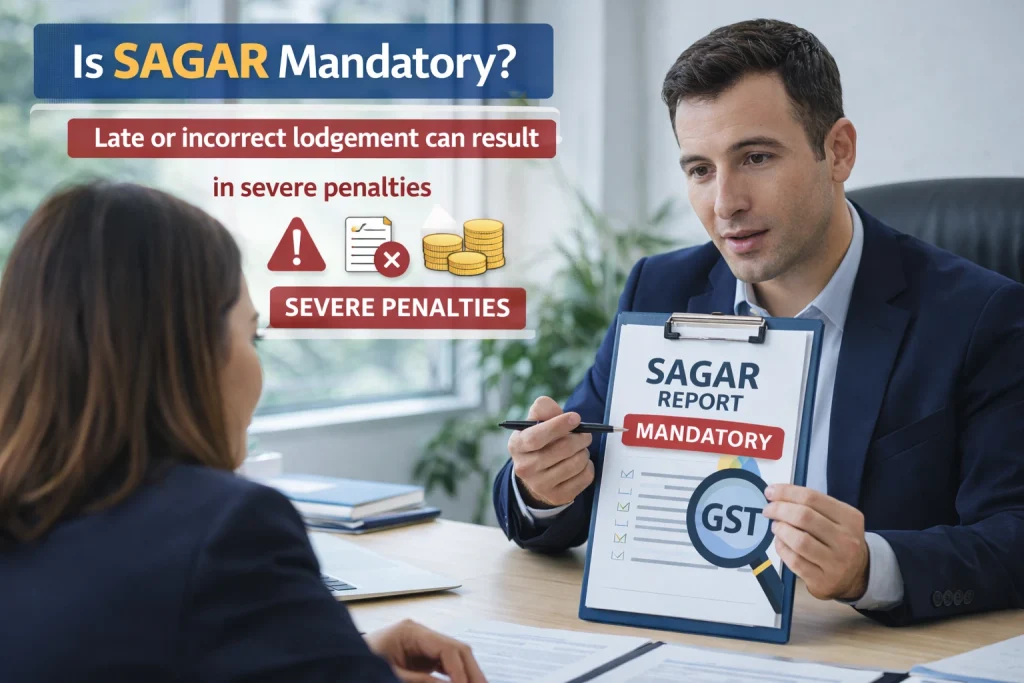
Is lodging this mandatory?
Yes. Once a taxpayer is notified, lodging it becomes a legal requirement under the GST law.
Lodging late or providing incorrect information can result in severe penalties. Large businesses need to be careful and accurate.
What Does the SAGAR Cover?
It includes several key sections, each focusing on a different GST risk area.
1. Addressing ATO Recommendations
Businesses must explain:
- Whether they have addressed issues from previous GST assurance reviews
- How low-assurance areas or red flags have been managed
- What actions were taken after the last ATO review
This section is important because it shows the ATO that the business is actively improving its GST compliance.
2. GST Governance
This section focuses on how well GST is managed within the business. It asks whether:
- There have been material business or system changes
- GST governance standards have been maintained or improved
- Internal processes and controls are properly documented
Good GST governance can reduce future reviews and build trust with the ATO.
3. GST Analytical Tool (GAT)
The GST Analytical Tool (GAT) is a reconciliation between:
- Audited financial statements
- Annualised BAS data
It helps identify:
- Differences between accounting data and GST reporting
- Reasons for any variances
Only a small number of questions require numbers, and these mainly come from the GAT. Starting this process early is strongly recommended.
4. Uncertain GST Positions
Businesses must disclose material uncertain GST positions taken during the year.
A position may be considered uncertain if:
- It goes against ATO guidance
- It is less likely to be correct
- The GST amount exceeds the materiality threshold
This section requires strong internal controls and proper documentation.
5. GST Errors and Adjustments
This section requires disclosure of:
- Material GST reporting errors from prior periods
- Significant input tax credit claims related to earlier tax periods
Supporting evidence is essential to demonstrate reasonable care.
How Can Businesses Prepare for This?
To make this annual GST return less stressful, businesses should:
- Start preparation early
- Review previous ATO recommendations
- Maintain clear GST governance documentation
- Perform the GAT annually, not just when required
- Keep objective evidence to support all disclosures
A proactive approach shows the ATO that GST compliance is taken seriously.
Why does this annual GST return matter?
It’s more than a compliance form. It directly influences how the ATO views your business.
A well-prepared return can:
- Reduce the intensity of future audits
- Improve GST assurance ratings
- Minimise compliance disruptions
- Protect management time and resources
- Strengthen long-term trust with the ATO
For large businesses, investing in GST governance today can prevent costly issues tomorrow.
(FAQs)
Final Thoughts
This is a step towards clearer GST reporting in Australia. It may seem complex, but with early preparation and proper records, it can be easy to manage.
Businesses that focus on GST rules today will have smoother dealings with the ATO in the future.