
What is BAS? A Simple Guide for Australian Businesses
If you run a business in Australia, sooner or later you’ll hear about this word. Many business owners, when they first hear about it, they get confused or nervous about it. Especially for new sole traders and small owners, this is very common.
But once you know about it and understand the basics, it isn’t as difficult as it sounds. It’s just a regular report that helps the ATO (Australian Taxation Office) understand how much tax has collected or paid.

In this guide, I’ll explain everything about this, who needs to lodge (submit) it, what the basic information goes into it, how GST is connected and how you can manage it easily without any difficulty and stress. Here, you can see that everything is explained in very simple, easy-to-understand wording.
What Does BAS Mean?
What is the actual meaning of this word?
A Business Activity Statement is a form that businesses send to the Australian Taxation Office (ATO). This form shows the ATO what tax activities happened in your business during a certain time period.
Most businesses use it to report:
- GST collected from customers
- GST paid on business expenses
- PAYG tax taken from employee salaries(if you have staff)
- PAYG instalments for income tax
One thing to keep in mind is that it only includes the taxes that apply to your business, not every business reports all of these items.
Why it’s Important for Businesses
It plays a big role in the Australian tax system.
It helps the ATO to:
- Collect GST fairly
- Track business tax payments
- Issue GST refunds
- Make sure businesses follow tax rules
It helps business owners to:
- Stay compliant with tax laws
- Avoid big tax surprises
- Understand business cash flow
- Keep tax records organised
When it’s done correctly and on time, it actually makes business life easier.
How to Submit Your Report?
There are a few easy ways to lodge (submit) in Australia.
Online Options
- ATO Online services for business
- myGov (for sole traders)
- Accounting software that supports it
Other Options
- Through a registered tax or agents
- By mail using a paper form
Lodging online is faster and refunds are usually processed more quickly.
What Happens After You Lodge?

After lodgement:
- ATO reviews your reports
- If you owe money, payment is due
- If you are getting a refund, it’s sent to your bank account
GST refunds are often processed within 2 to 14 days, depending on checks.
Who Needs to Lodge (submit)?
You usually need to lodge it if your business is registered for GST. This applies to most business structures, including:
- Sole traders
- Partnerships
- Companies
- Trusts
GST Registration Rule
If your business turnover is $75000 or more per year, GST registration is compulsory. For a non-profit organisation, the threshold is $150,000. Once you register for GST, you must:
- Charge GST on taxable sales
- Lodge it regularly
- Pay GST to the ATO (if applicable)
If you are not registered for GST, you usually don’t need to lodge it. In that case, you may need to submit an Instalment Activity Statement (IAS) if PAYG instalments apply to you.
How to Prepare for Your Next BAS
Good preparation makes it much easier.
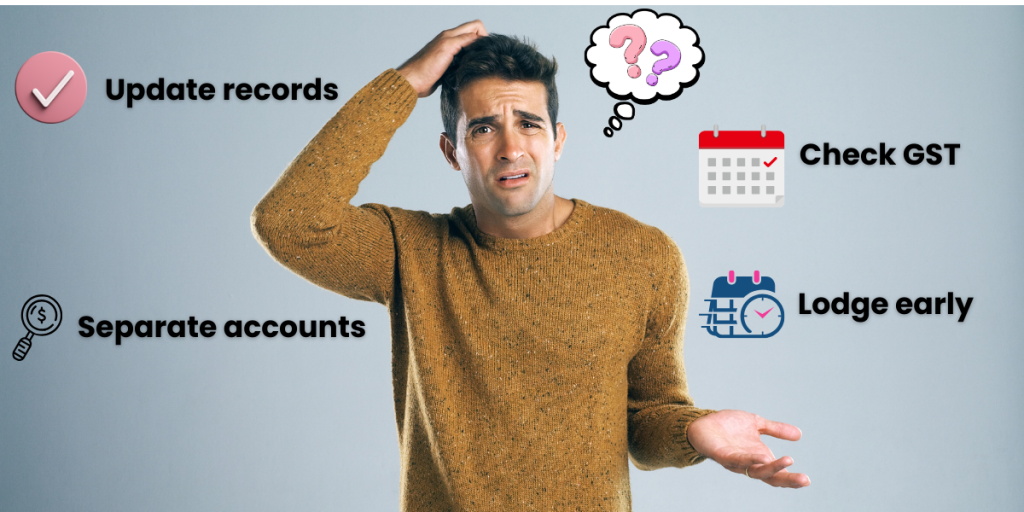
- Keep your sales and expenses updated regularly.
- Keep your business and personal spending separate.
- Check GST figures carefully
- Lodge early, not at the last minute
Many business owners use simple GST tools to verify numbers before submitting it.
What Information Is Included in this?
It has different sections, but not all sections apply to every business.
The most common items are:
| Items | What it means |
| GST on sales | GST you charged customers |
| GST on purchases | GST you paid on business expenses |
| PAYG withholding | Tax withheld from employee wages |
| PAYG instalments | Prepaid income tax |
You don’t need to send invoices or receipts when submitting your report.
However, you must keep proper records because the ATO may ask to see them later.
Do Sole Traders Need to Lodge It?
Being a sole trader doesn’t remove tax requirements. So obviously, sole traders need to lodge it.
If a sole trader is registered for GST, they must:
- Lodge it
- Report GST
- Meet its due dates
Many sole traders lodge it themselves online, especially when their business is small.
Understanding GST in BAS
For most businesses, GST is the main tax they need to report.
How GST Works
- GST is a 10% tax added to most goods and services in Australia.
- You collect GST from customers
- You pay GST on business expenses
- The difference is reported in your tax report.
Your shows whether:
- You owe GST to the ATO
- Or the ATO owes you a GST refund
How Often Do You Submit It?
It’s not always lodged at the same time for every business. The frequency depends on your business size and ATO rules.
Submission Frequency
| Lodgement type | Who it applies to |
| Monthly | Businesses with a turnover of over $20 million |
| Quarterly | Most small and medium businesses |
| Annually | Businesses voluntarily registered for GST |
Most Australian small businesses lodge it quarterly, because it is easier to manage and less pressure on cash flow.
Due Dates in Australia
The deadlines change depending on how often you submit it.
Quarterly Due Dates
| Quarter | Period | Due date |
| Q1 | July – September | 28 October |
| Q2 | October – December | 28 February |
| Q3 | January – March | 28 April |
| Q4 | April – June | 28 July |
Monthly Due Dates
You must submit your monthly report within 21 days after the end of the month.
If a due date has weekends or public holidays in this situation, ATO usually allows you to lodge it on the next working day.
How Its Works in Real Life
Let’s understand it with a simple example.
During one quarter:
- Sales (including GST): $11,000
- GST collected: $1,000
Business expenses (including GST):
- Expenses: $5,500
- GST paid: $500
Tax Calculation
- GST collected: $1,000
- GST paid: $500
- GST payable to ATO: $500
If the GST paid is higher than the GST collected, you may receive a refund instead.
Many businesses double-check these figures using a GST calculator before lodging it, just to avoid mistakes.
What If You Cannot Pay Your Tax?
This happens to many businesses, so don’t panic.
If you cannot pay:
- Lodge(submit) it on time
- Contact the ATO
- Request a payment plan
Lodging on time helps reduce penalties, even if payment is delayed.
Penalties and Late Lodgement
If you lodge it late, the ATO may apply:
- Failure to lodge penalty
- Interest on unpaid amounts
Penalties depend on:
- Business size
- How late can you submit it
Submitting even a nil report on time is very important.
Cash vs Recorded Accounting
When lodging it, you must use the accounting method you registered with.
Cash Method
- GST is reported when money is received or paid
- Common for sole traders and small businesses
Recorded Method
- GST is recorded whenever invoicesare issued or received.
- Common for larger businesses
Using the wrong method is a common mistake.
What is BAS and How Is It Different from IAS?
Many people get confused between it and IAS.
| BAS | IAS |
| Used by GST-registered businesses | Used by non-GST registered businesses |
| Reports GST and PAYG | Reports PAYG instalments only |
| Lodged monthly, quarterly or annually | Usually lodged quarterly |
Once you register for GST, IAS usually stops and regular reporting starts.
Common Mistakes to Avoid
Here are mistakes seen very often:
- Reporting GST in the wrong period
- Claiming GST on GST-free items
- Mixing personal and business expenses
- Missing due dates
- Not keeping proper records
Avoiding these mistakes helps you save money and reduce stress.
FAQs
Final Thoughts
Understanding what is BAS is an important step for every Australian business. It’s not something to fear. It is simply a way to report your business tax activity to the ATO, with proper records, GST calculations and on-time lodgment, it becomes a normal routine. You can use helpful tools and clear records can save your time and reduce mistakes. Especially when you are still learning.


